Textile-based art has often remained at the margins of contemporary art movements and the critical dialogues that surround them. They are generally coded as handicrafts—worthy of aesthetic admiration, yet dismissed as decorative rather than understood as capable of expressing complex individual, political, or conceptual concerns. In the case of Indigenous textiles, this marginalization is further shaped by colonial hierarchies that have long dictated not only what counts as art, but also which social groups are recognized as its legitimate producers. Maya Indigenous textiles from Guatemala inhabit this very artistic liminality, in which they are coveted and acquired as artifacts by foreigners and non-indigenous Guatemalans (ladinos) alike, but their appreciation hinges on an inherent misrepresentation of weavers as folk artisans, and not as artists contributing to a larger art historical discussion. This relationship was further complicated during the Guatemalan Armed Conflict (1960-1996), as tense, racialized class divisions framed any expression of Maya Indigenous identity as directly analogous to the guerrilla resistance. After the Conflict, historical clarification processes visualized the scale of the anti-Indigenous projects led by the Guatemalan government, including violent campaigns which used Maya textiles as a tool of ideological warfare.1 Maya-led movements urged a systemic reset, in which Guatemalans collectively reassessed the social, political, and cultural systems that continued to sideline Indigenous perspectives. This call to action also included a reconsideration of Maya Indigenous textiles as both an art form and as a key transmitter of cultural memory, resistance, and collective identity.2 In turn, Maya weaving and its technologies have become important avenues through which contemporary artists reflect on the sociocultural context of postwar Guatemala.
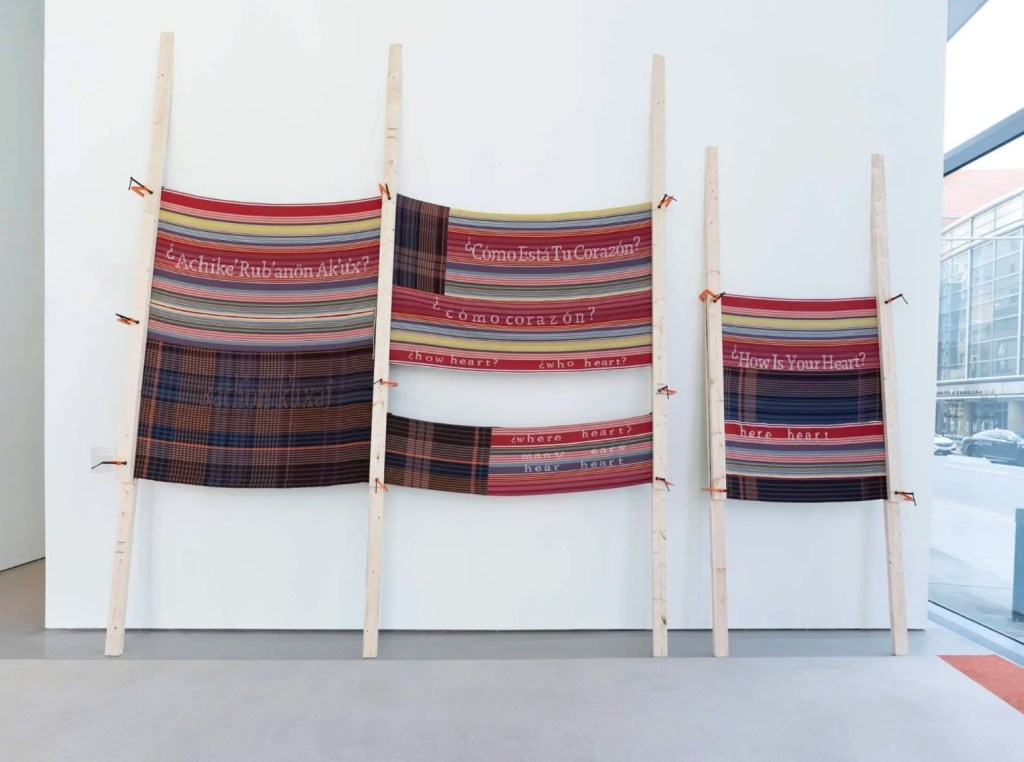
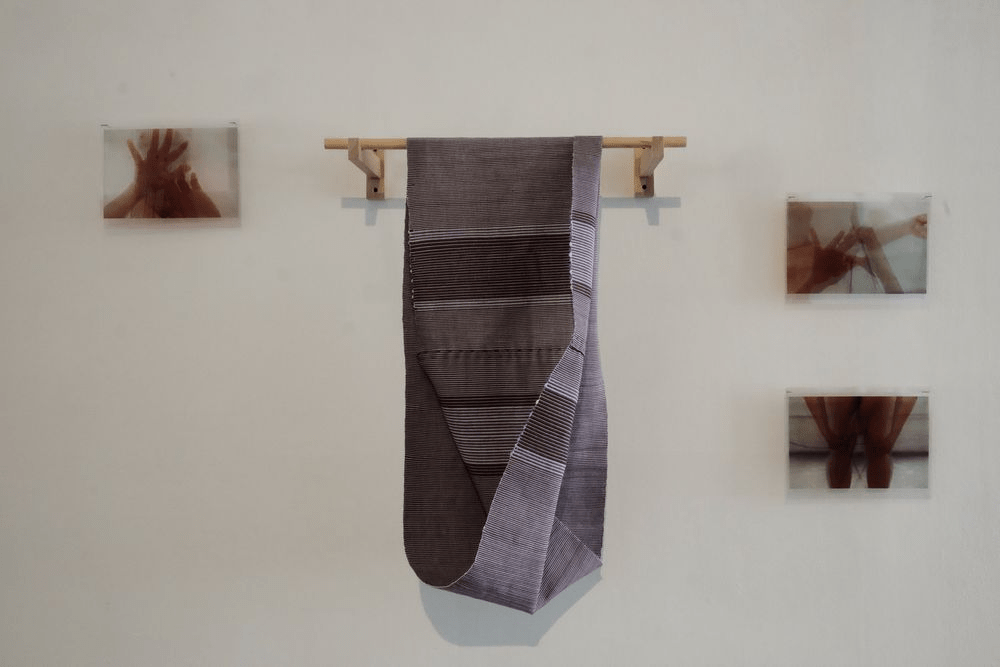
Weaving is a generous term that can be helpful to visualize abstract processes of memory, connection, and forward action. On the backstrap loom, the action of weaving itself is conducive to reflection. The swaying motion of the weaver guides the opening and closing of the textile’s warp, with each stroke allowing for a new weft thread to be introduced. Weaver, educator, and interpreter Hellen Áscoli (b. Guatemala City, 1984) considers how the backstrap loom responds to tension and movement, generating a direct relationship between textile production and the weaver’s body. Áscoli’s work disassembles the technologies of textile-making through pedagogical exercises that experiment with visuality and language, destabilizing the Western separation between object (textile) and subject (body). Her practice generates processes of translation between material form and embodied knowledge, engaging words and terms in Spanish, Kaqchikel, and English to frame weaving as an epistemological practice capable of recording and projecting community experiences. In pieces such as El ser tejido tiene corazón (Figure 2, 2022), Áscoli draws on the concept of the heart, or k’ux,3 of the weaving, understood as the generative space that forms between wefts and allows the textile to come into being. In ¿Cómo está tu corazón? / ¿Achike’ rub’anön ak’u’x? / How is your heart? (Figure 1, 2020–2021), she extends this idea through woven phrases that recall everyday inquiries of well-being and the tender terms of affection that circulate within tight-knit community spaces.
With community and learning at the very center of her practice, Áscoli takes care to emphasize the political dimension of backstrap loom weaving within the Guatemalan context. She situates herself as a continual learner, and prioritizes collaboration as a key reflective tool to understand the role of cloth as a vessel for individual experiences and collective history. Kaqchikel poet Negma Coy joins her in developing En los hilos encontré / Xinwil pa taq b’ätz’ / In the Threads I Found (2022), a pedagogical resource which poses questions that prompt Áscoli and other students of the medium to further uncover the body-environment relationships inherent to weaving: “Are there limits between our bodies and the world that surrounds us? / Where do sensation and location touch? / What bodies do we inhabit? / What is the vibration of Kaqchikel?” Áscoli’s work visualizes weaving as a transformative practice which can connect communities and histories across boundaries imposed by imperial and colonial frameworks.
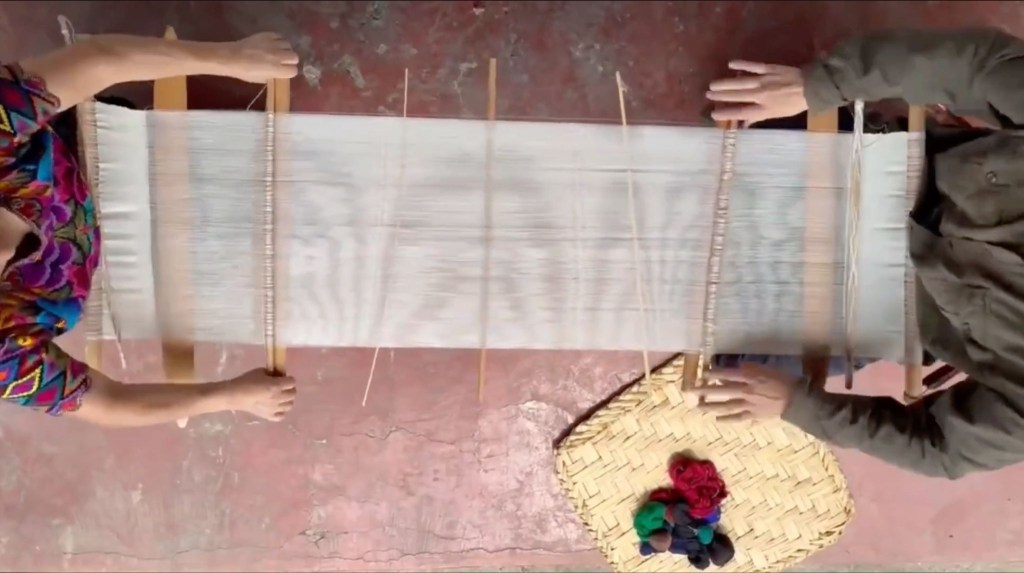
For Jeff Cán Xicay (b. Patzicía, 2003), the backstrap loom similarly becomes a site of teaching: for him, it is the “school” through which the women in his family pass down ancestral knowledge.4 Working from his Maya Kaqchikel community in Patzicía, Chimaltenango, Cán Xicay eagerly experiments with the formal components of weaving to find new transdisciplinary languages via which he can articulate the values and history rooted in the Kaqchikel textile tradition. Mamá (Figure 3, 2023) is a performance piece in which the artist and his mother simultaneously weave a white textile on a double-backstrap loom. The textile emerges slowly between mother and son, and when both ends encounter each other in the middle, the textile becomes a living archive of Cán Xicay’s genealogy. The artist is interested in unearthing non-linear conceptions of time and history, engaging deeply with the “lived experience” of textiles to consider how a weaver embeds in cloth not only their own personal experience, but also the collective history, present, and future of their community.5
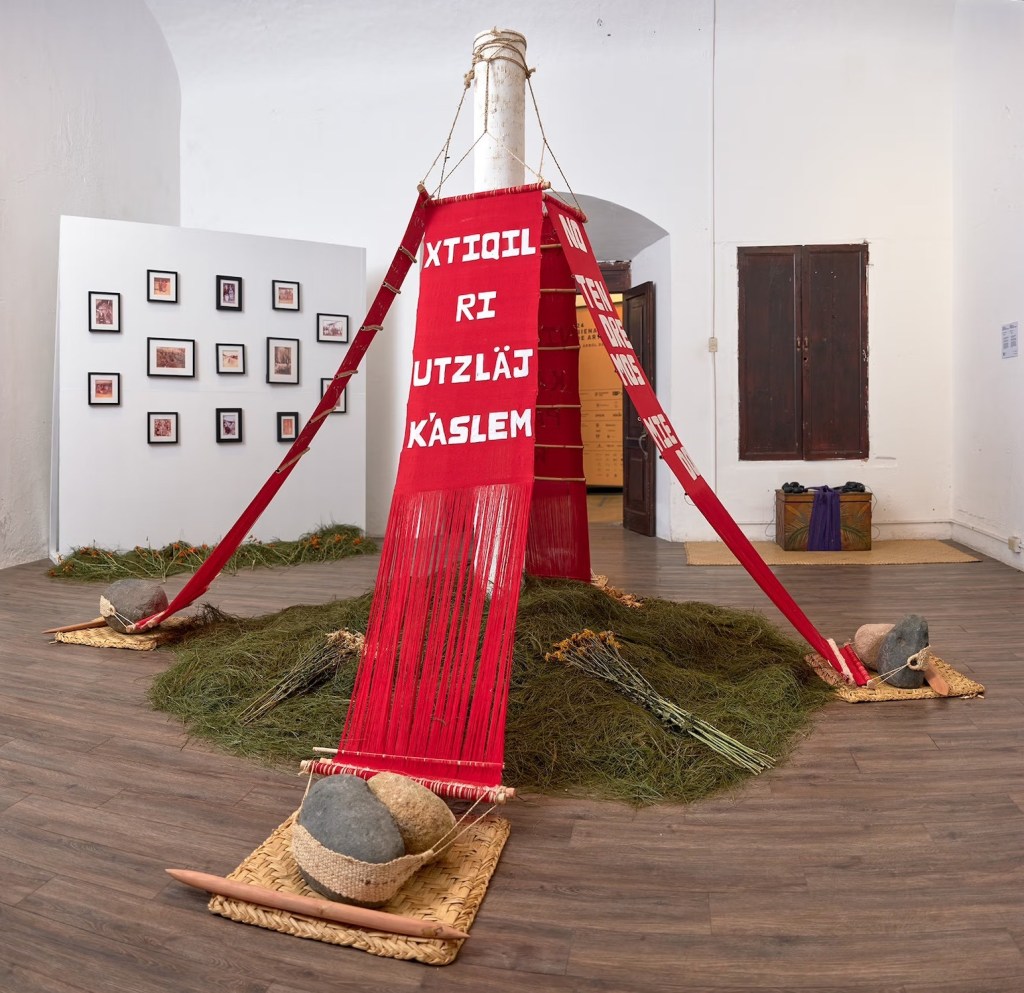
In thinking trans-temporally, Cán Xicay offsets the colonial gaze to center how Indigenous Guatemalans are tangibly constructing their own futurity. Ri Qa Ray’bäl / Our Desires (Figure 4, 2025), envisioned for the 24th Bienal del Arte Paiz in Guatemala City, is an installation featuring four backstrap looms suspended from a central post in a room strewn with pine needles. Each loom includes a red panel of cloth—the same color as the Patzicía huipil—with a phrase appliquéd onto the textile. Cán Xicay draws these phrases from Kajqay, a community book begun in Patzicía in 2006 that gathers Kaqchikel Indigenous memory, testimonies of resistance, and collective desires for the community’s future. Within the context of the biennial, Cán Xicay generates a living effigy of his community, using textile, language, and installation to disrupt the conventional relationship between viewer and viewed, institution and Indigenous subject. The work urges the breaking of a barrier, refusing the expectation that Indigenous artists and audiences must accommodate existing contemporary art, and instead insisting that contemporary art accommodate Indigenous realities and perspectives.6
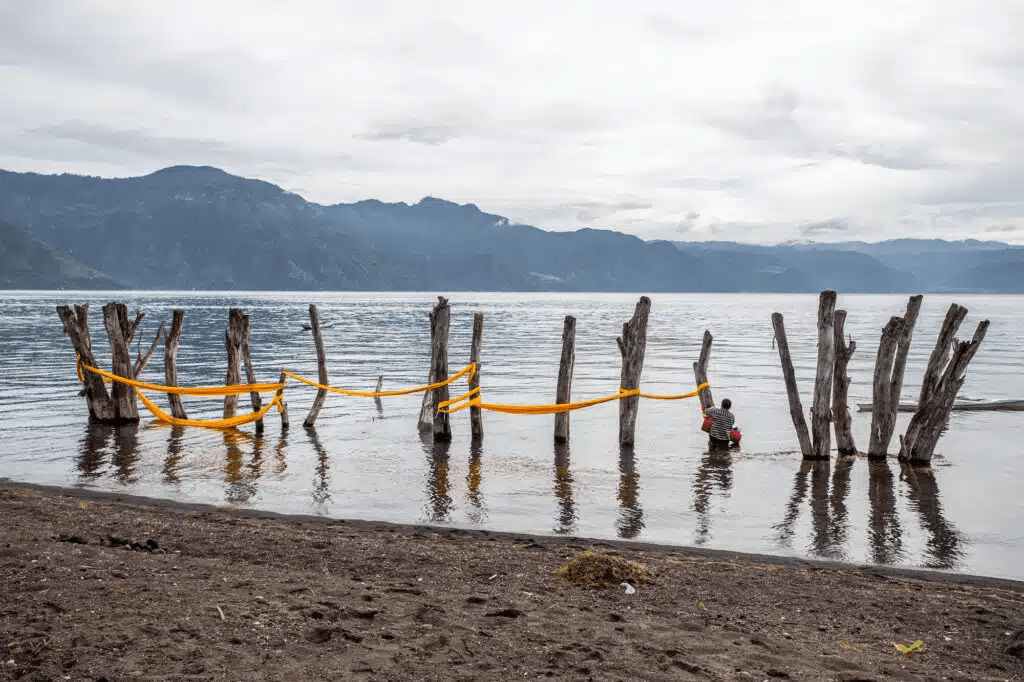
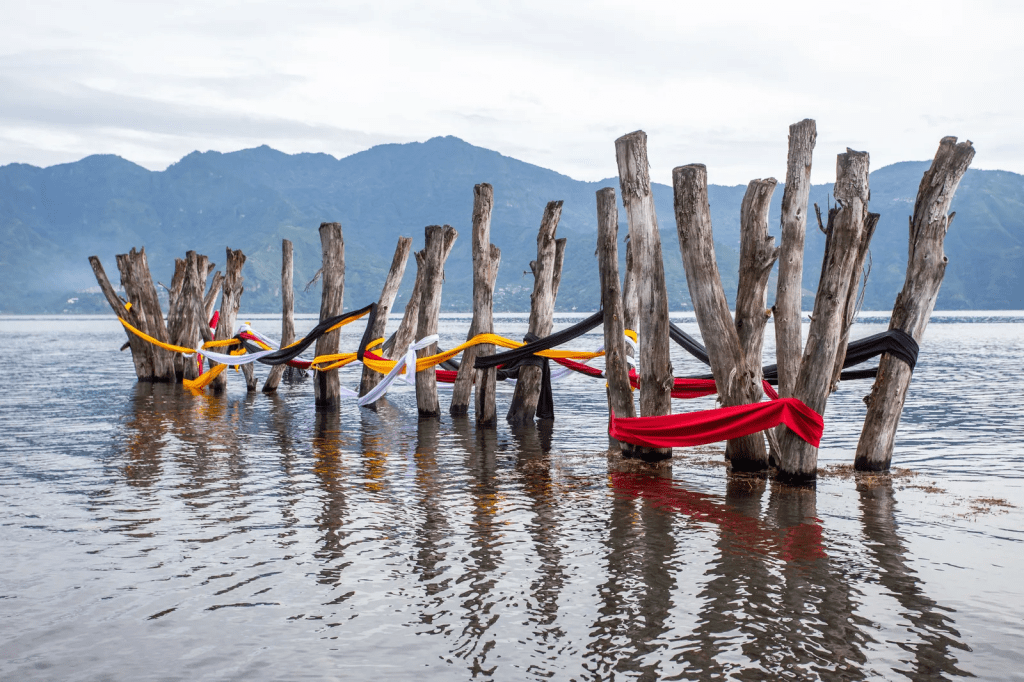
The work of Antonio Pichillá Quiacain (b. San Pedro La Laguna, Sololá, 1982) foregrounds the relationship between weaving, birth, and nature embedded in the Maya Tz’utujil textile tradition. Having learned weaving from his mother at a young age, Pichillá is interested in examining the Tz’utujil notion of the backstrap loom as an umbilical cord, in which community, body, and landscape are bound together through mutual care and interdependence.7 Pichillá combines sculpture, performance, and installation with a rigorous use of color, through which he emphasizes how ancestral Tz’utujil perspectives can speak directly to contemporary struggles for sustainability, environmental justice, and Indigenous sovereignty. In his video-performance Tejiendo el paisaje [Weaving the landscape] (Figure 5, 2020), Pichillá activates the landscape of San Pedro La Laguna and Lake Atitlán. He uses his body to interweave long pieces of cloth through a grouping of dried tree trunks by the shore of the lake. Pichillá regularly uses yellow, red, black, and white in his pieces to allude to the four types of corn, which are also the four foundational colors of Tz’utujil cosmology.8 As he moves through the water, he creates endless intersections of the cloth, establishing new points of contact that evoke the heart of a textile (R’kux Kiem / Ruk’u’x Keem). For Pichillá, this physical entanglement carries spiritual and ecological meaning: “Getting entangled between body and soul,” Pichillá explains, “is a manifestation of the close relationship between mother nature and the human being.”9
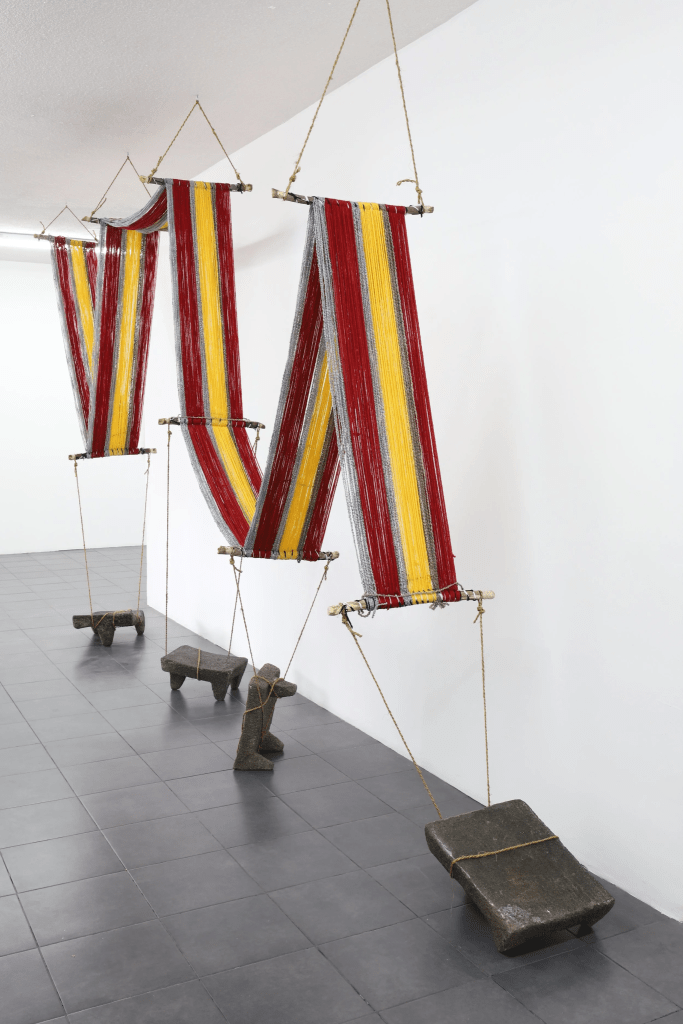
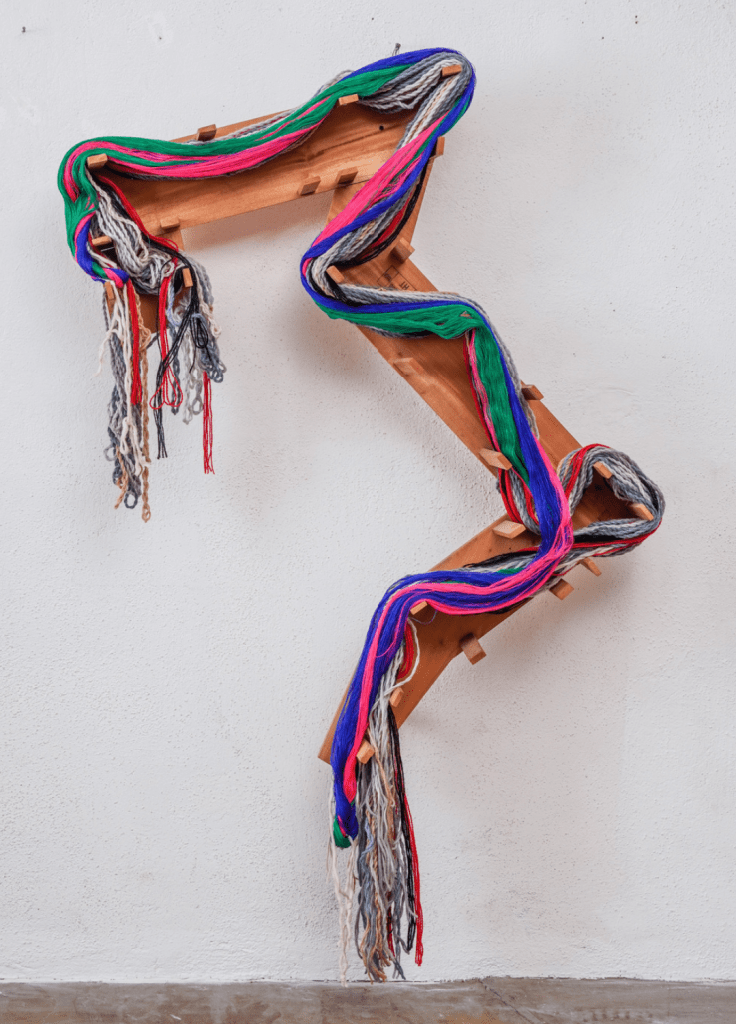
Pichillá is additionally interested in mobilizing languages of abstraction to deconstruct and further explore concepts of Maya Tz’utujil cosmology. He juxtaposes formal experimentation in shape and color with knowledge drawn from his own community as well pre-Hispanic Maya texts such as the Popol Vuh and the Madrid Codex. Through this action, he counteracts the notion that Maya Indigenous worldviews are static and can only be manifested as they were established thousands of years ago.10 The feathered serpent, Kukulcán or Q’uq’umatz, is remarkably present as a thematic axis, and he revisits its shape and meaning constantly using materials relating to textile-making practices. Kukulcán (Figure 6, 2018) uses loom bars and thread to generate a long structure, which only takes the shape of the snake once it is anchored to the ceiling and weighted down with metates (grinding stones). In another iteration, the piece is titled Ku Kul Kan (Figure 7, 2020) and the shape is generated not via tension, but a tangled interweaving of multicolored threads through a wooden warper. Pichillá affirms the feathered serpent as an energetic, cosmic presence, which can comfortably contain the diversity of cosmologies and perspectives present within contemporary Maya Indigenous identity.
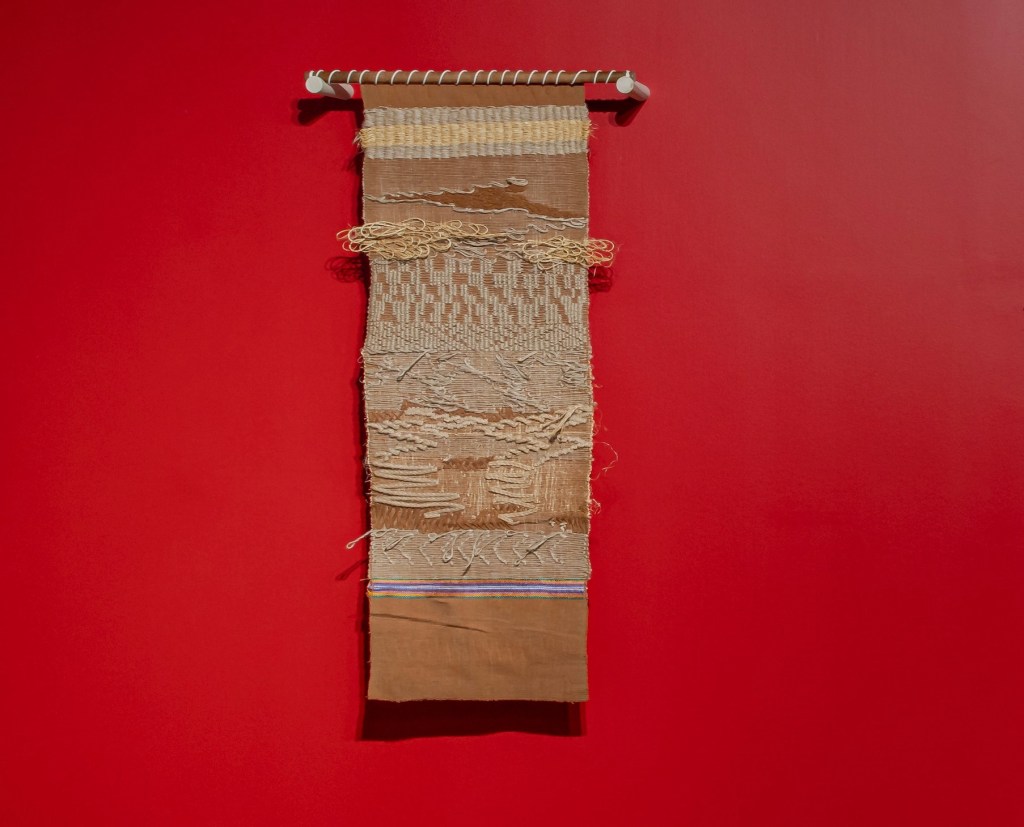
Angélica Serech (b. San Juan Comalapa, 1982) is a key proponent of Maya Indigenous weaving as a living, responsive art form. Since her introduction to the backstrap loom as a young child, Serech has been interested in pushing the limits of the medium, working largely from intuition as the technologies, materiality, and rhythms of weaving respond to her gestures. These explorations are nonetheless firmly grounded in textile-making as a ‘pedagogy of resistance’ in which the Kaqchikel community weaves and un-weaves itself to document its collective history. Serech eagerly disobeys the formal ‘rules’ of weaving, rejecting the notion that Kaqchikel textiles should only follow standard colors, motifs and dimensions to reflect the ancestral knowledge embedded in the practice.11 In Diálogos del Maguey (Figures 8 & 9), her 2024 solo exhibition at La Galería Rebelde in Guatemala City, she explores this dynamism by creating artworks that radically vary in their use of materials, colors, and scales. Each piece is a different exercise in tension and composition that allows her to explore how materials can speak to each other both texturally and visually. The rough maguey fibers pull at soft wool, while tightly woven cotton can weigh down an otherwise light mesh of the same material. Serech incorporates corn husks, leaves, and small tree branches with the same formal attentiveness she gives to finer embellishments, often within a single piece. The resulting objects function as textural maps that intimately envision Serech’s personal and collective identity.
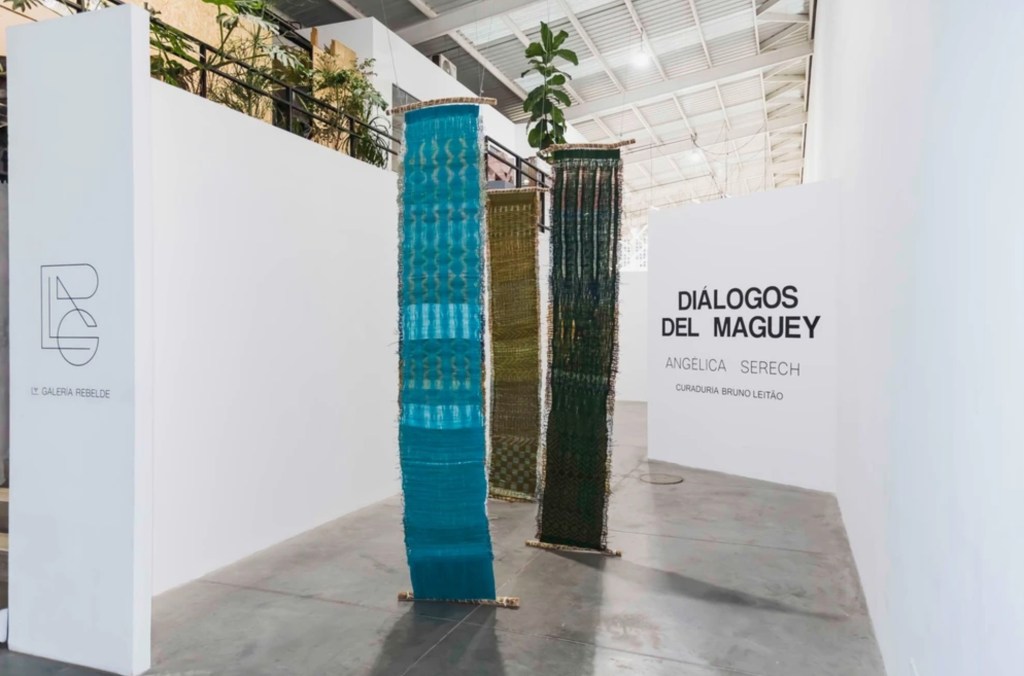
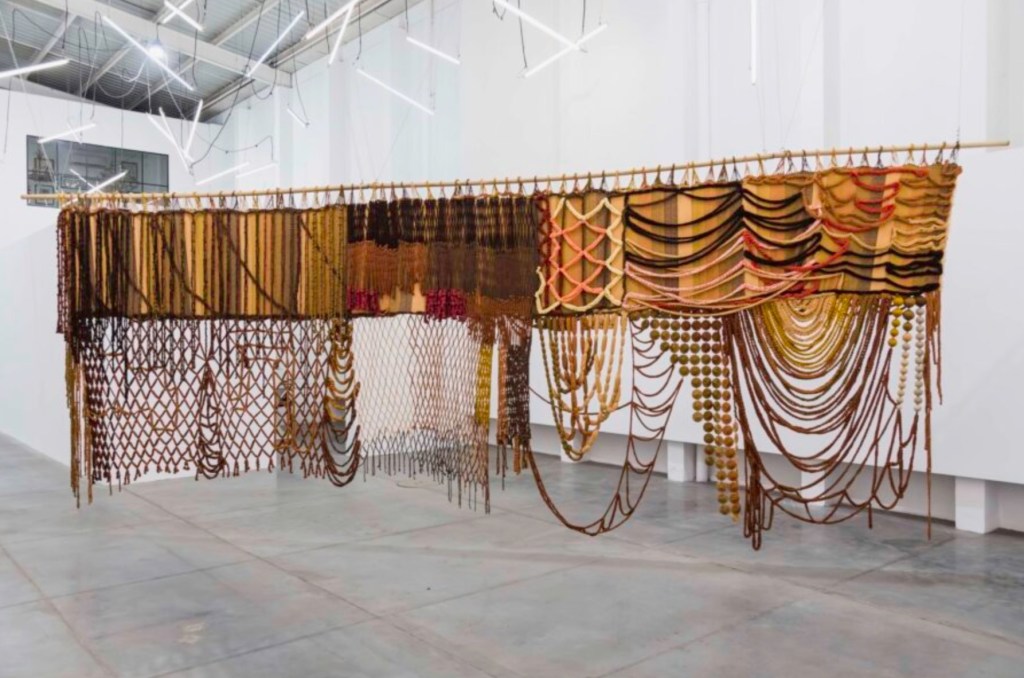
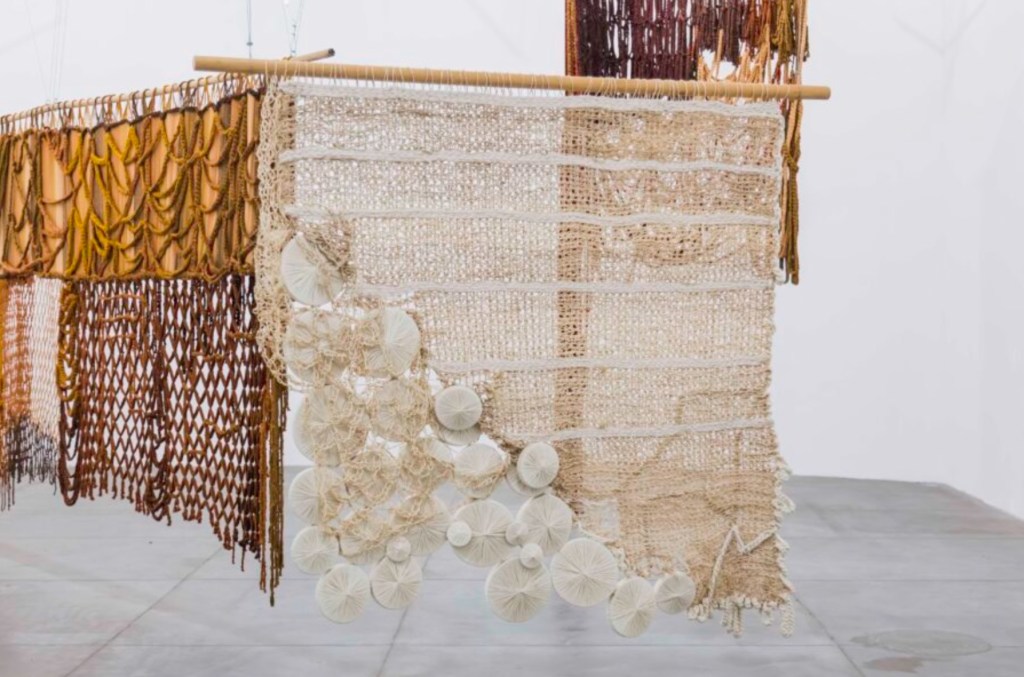
As a Kaqchikel artist born during the height of the Armed Conflict, Serech is interested in emphasizing the resistance and memory that guide the practices of many contemporary Maya Indigenous artists in Guatemala. For Serech, each fiber threaded in a piece carries the weight of memory, capturing the history of not only the material, but of the body that wove it, the plant it originated from, and the community that cultivated it. Where Diálogos del Maguey stages this through radical material experimentation, earlier pieces such as Alma (Figure 10, 2022) and Nu rach’ulew (Figure 11, 2020) reveal how deeply tradition itself already carries that historical weight. Both pieces directly replicate important elements of the old-style huipil of San Juan Comalapa—in the case of Alma, it is a series of brocaded motifs which include peacocks, jaguars, and double-headed eagles, while in Nu rach’ulew, Ixcaco thread (raw brown cotton thread) becomes the focal point. Serech only gently pushes at the boundaries of the traditional textile in these pieces, but in doing so, she draws attention to how even tradition has been transformed to reflect new community concerns, such as the pan-Maya Indigenous solidarity movements that emerged in Guatemala in the wake of the Armed Conflict. She reminds the viewer that resistance was already woven into the tradition long before she arrived at the loom, and that her own innovations are inseparable from it.
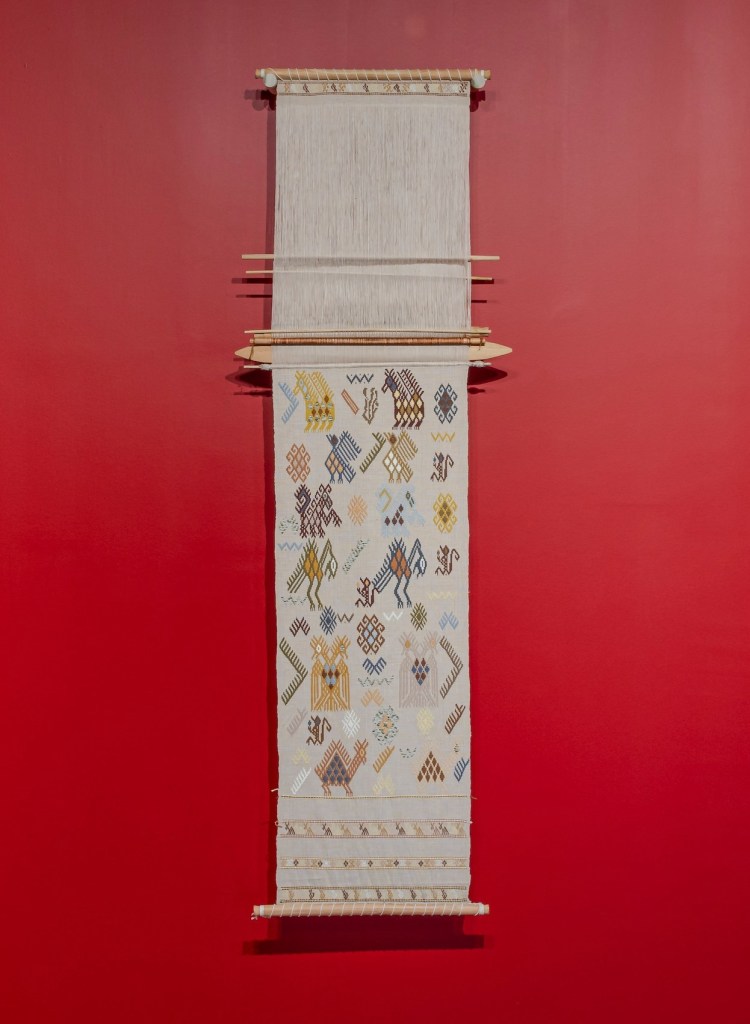
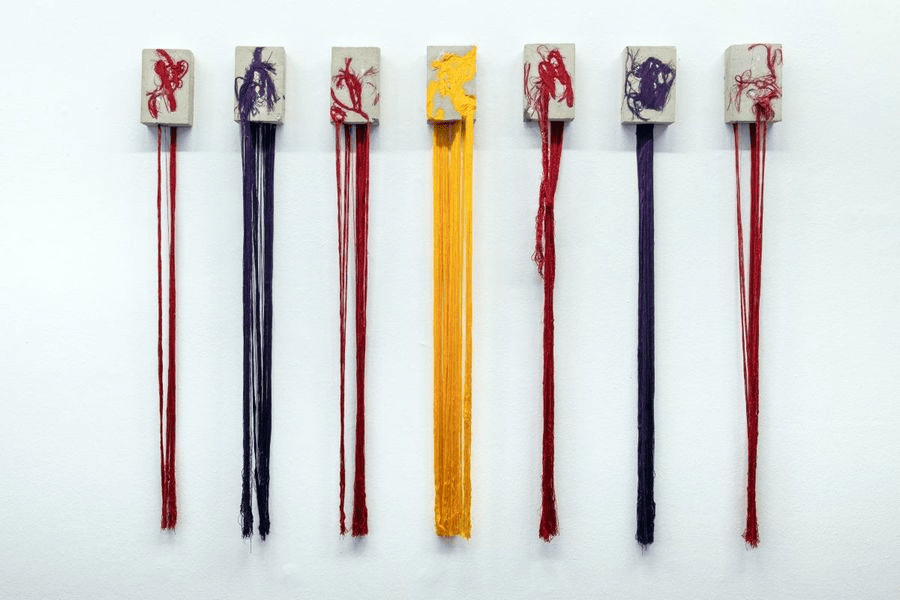
Where Serech works from the loom, Marilyn Boror Bor (b. San Juan Sacatepéquez, 1984) embodies textiles as resistance by wearing and incorporating traje into her life praxis. She considers the social role of weaving both within and outside of its community, observing how visual expressions of Maya Indigeneity change depending on their context. Through a material emphasis on concrete, Boror Bor critiques the homogenization endemic to colonial notions of ‘progress’. She connects this to the accelerating expansion of industrial and urban centers, as well as processes of ‘ladinización’ that accompany them. Boror Bor draws from her own experience migrating from her predominantly Kaqchikel community in San Juan Sacatepéquez to Guatemala City, a move that compelled her to stop wearing her traditional huipil and corte to assimilate to ladino visual standards.12 Through works such as Peinar las raíces (Figure 12, 2022), Boror Bor reflects on her matrilineal heritage of weavers, and how the tradition in her family was not passed onto her generation. She first buries a tangled skein of red, white, purple, or yellow thread in concrete. Then, once it solidifies, she gently untangles and combs the threads with her hands, imitating the movements with which her grandmother prepared threads for weaving. Boror Bor acknowledges that while she cannot learn weaving without a deep investment in the practice, she can generate these exercises of familial memory and invite other members in her community to do the same.13
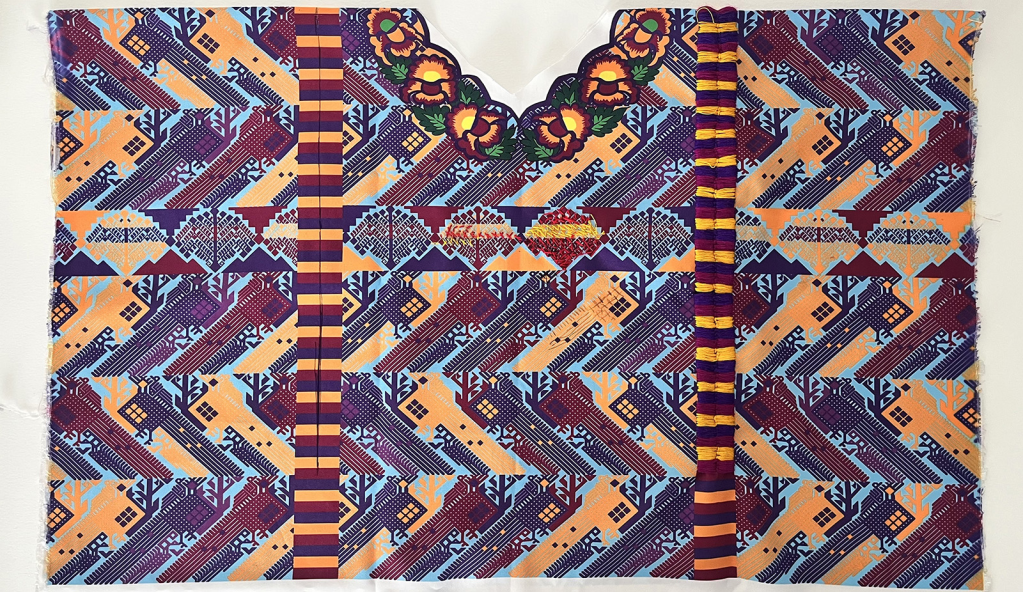
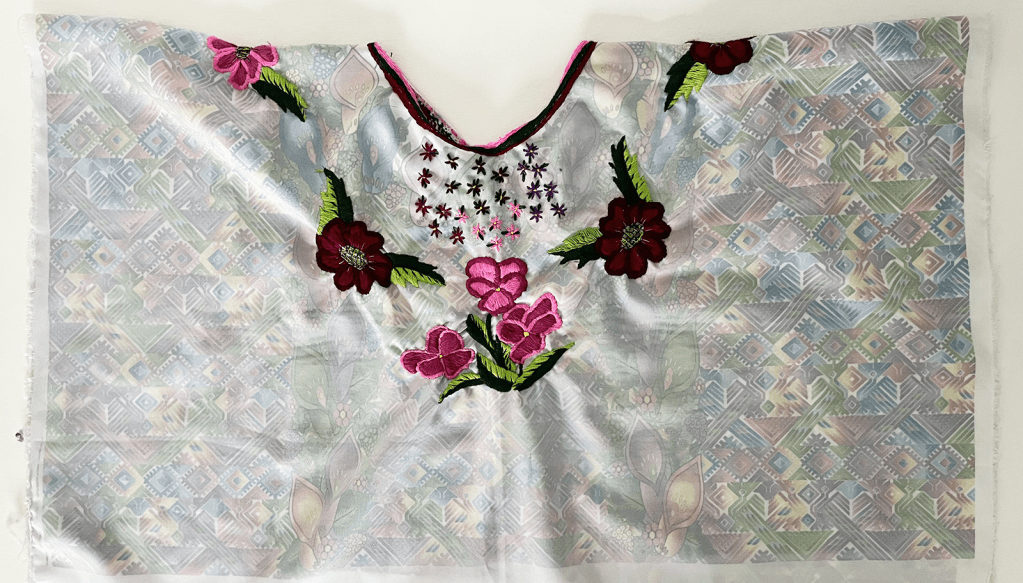
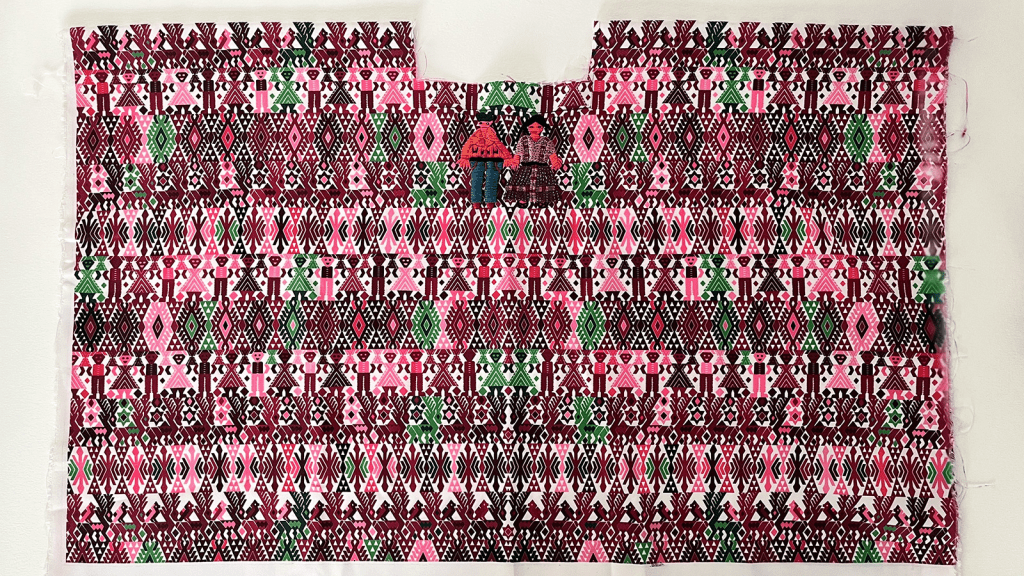
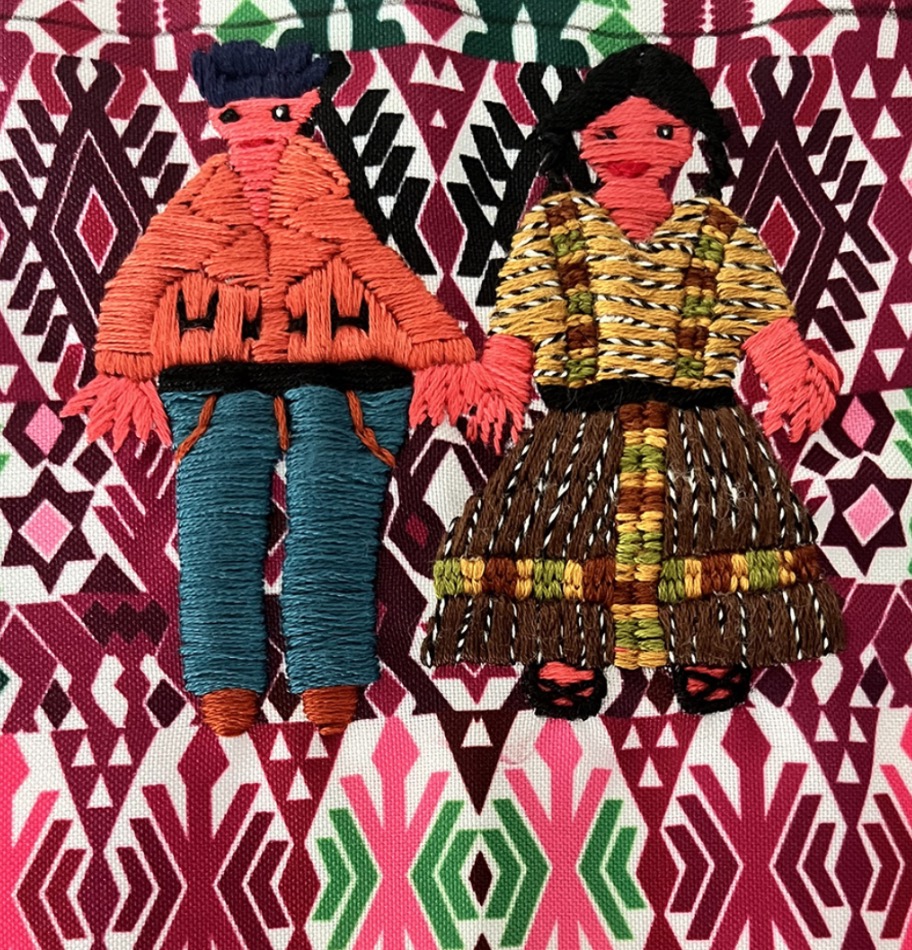
In researching the role of industrialization in causing movements of homogenization, Boror Bor analyzes processes within the textile industry that endanger vital networks for the circulation of ancestral artistry and knowledge. In Re/Escribir – Re/Nombrar (2019-2025) she embroiders on top of commercial huipiles made with sublimation technology. These huipiles are produced en masse, and can be sold for as low as 50 GTQ.14 Mobilizing embroidery as a meditative action, Boror Bor reflects on the idiosyncratic details that make hand-woven textiles a record-keeping technology analogous to writing.15 In some of the pieces, she embroiders over printed images of randas (Figure 13), ironically highlighting how even this functional stitch was transferred onto the garment. In other pieces, she turns them inside-out to embroider them (Figure 14), emphasizing that each sublimated piece is printed onto the same cheap polyester fabric. She even takes the opportunity to tangibly emphasize the lack of human agency behind these pieces by adding two people, very clearly wearing the Quetzaltenango traje, onto a huipil printed with a host of pixelated human figures (Figure 15). Boror Bor questions if these iterations of the Maya textile are any different from other mass-produced western blouses. After all, what Indigenous histories, knowledge, or memory can they encode if Indigenous hands never touched it?
Since the mid-twentieth century, contemporary art has consistently called for an expansion in how audiences look at art and the conversations it can generate. In practice, however, these spaces rarely included the diversity of perspectives and mediums needed to actually reach that artistic expansion. In Guatemala, the situation was no different—artistic spaces were dominated by male ladino painters and sculptors interested in guatemalidad mostly as an idealized Hispanic-Indigenous syncretism that relied on static visions of the Maya to construct a national cultural identity. With the end of the Armed Conflict, new groups of artists, curators, and cultural practitioners worked to generate community spaces and grassroots movements that prioritized critical dialogue and social justice within the arts. While the effect of this was not immediate, in 2026, the main proponents of Guatemalan contemporary art manifest a desire to critique, expand, and unsettle dominant narratives in all spheres of life—and they are doing so by mobilizing cross-disciplinarity, conceptual rigor, and committed collective dialogue.
Backstrap loom weaving, in its most traditional form, is an archival tool that manifests knowledge and transmits it across time and space. The five artists gathered in this text recognize this, and push it further—they harness the formal and conceptual dimensions of Maya Indigenous weaving to emphasize it as a technology of resistance rooted in the Guatemalan territory. Each of their practices works rigorously from the individual to the collective, generating spaces of connection, discussion, and tangible forward action towards more just futures.
- Comisión para el Esclarecimiento Histórico, Guatemala, memoria del silencio, Tomo V: Conclusiones y recomendaciones (Oficina de Servicios para Proyectos de las Naciones Unidas, 1999), 78. ↩︎
- Irma Otzoy, “Maya Clothing and Identity,” in Maya Cultural Activism in Guatemala (University of Texas Press, 1997), 150. ↩︎
- Heart translates to “K’ux” or “K’u’x” in some Maya languages, including Kaqchikel, K’iche, and Tz’utujil. ↩︎
- Fundación Paiz, “Jeff Cán Xicay, artista textil, nos cuenta su experiencia en #LaPlazadelArtista” (TikTok, March 3, 2025), https://www.tiktok.com/@fundacionpaiz/video/7477309759708777734 ↩︎
- Jeff Cán Xicay, “MOKAN (2024),” Jeff Cán Xicay, August 26, 2025, https://jeffcanxicay.com/2025/08/26/mokan/. ↩︎
- Elsa Chiquitó Rucal, “Mokan: espacio sagrado del tejido,” No Ficción, September 18, 2024, https://no-ficcion.com/mokan-espacio-sagrado-del-tejido/. ↩︎
- Galería Elvira Moreno, “Antonio Pichillá Quiacain — Overview,” Galería Elvira Moreno, https://galeriaelviramoreno.com/artists/54-antonio-pichilla-quiacain/overview/. ↩︎
- Kadist, “Antonio Pichillá: Tejiendo el paisaje [Weaving the Landscape],” Kadist, https://kadist.org/work/tejiendo-el-paisaje-weaving-the-landscape/. ↩︎
- Galería Elvira Moreno, “Antonio Pichillá Quiacain — Overview,” https://galeriaelviramoreno.com/artists/54-antonio-pichilla-quiacain/overview/. ↩︎
- Denver Art Museum, “Antonio Pichillá: Artist in ‘Who Tells a Tale Adds a Tail’ at the Denver Art Museum” (YouTube, August 2, 2022), https://www.youtube.com/watch?v=tdRh5klrZ4Y ↩︎
- Maria Jacinta Xón Riquiac, “Xamanil chuwa ruway kem / Alma en tramas” (Galería Rebelde, November 2025), exhibition catalog. ↩︎
- Marilyn Boror Bor, “Peinar las raíces,” Marilyn Boror Bor, April 2022. https://marilynboror.com/peinar-las-raices/. ↩︎
- Maya Juracán, “Conversación con Marilyn Boror Bor: Poéticas de alfabetización hacia los mundos originarios,” La Escuela, October 10, 2024. https://laescuela.art/es/campus/library/conversaciones/poeticas-de-alfabetizacion-hacia-los-mundos-originarios-marilyn-boror-con-maya-juracan. ↩︎
- Around 6.50 USD. ↩︎
- Marilyn Boror Bor, “Re/Escribir – Re/Nombrar,” Marilyn Boror Bor, https://marilynboror.com/re-escribir-re-nombrar/. ↩︎
