Text written for ‘Half a Second or Less‘ at UT Austin’s Visual Arts Center. This show brings together the work of seven graduating studio MFA students who are shaped by change, attention, and duration.
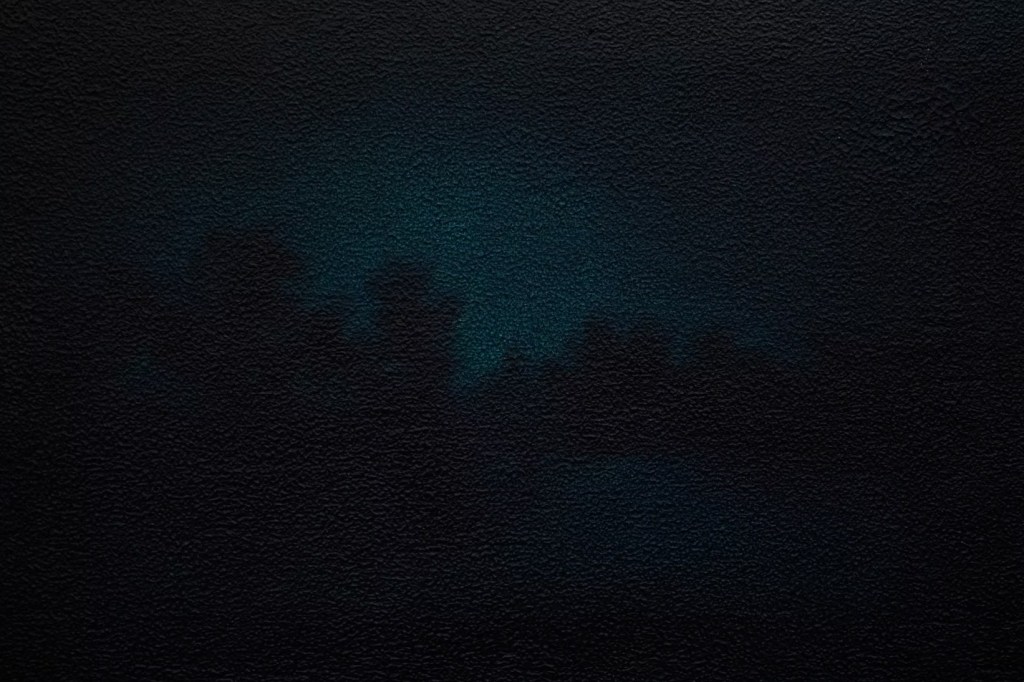
Morgan Grigsby paints as a meandering act, producing a wandering visual experience that takes the viewer through the Gulf Coastal Plain of Texas. He unearths an esoteric history of the region, working from sensorial memories through which he explores the atmospheric effects of mud, fog, rain and light. Grigsby’s work pushes the edges of representation and abstraction to find the aural qualities of Southeast Texas.
This impression of the landscape, while relying on experiments in luminosity, shadow, and transparency, starts through a highly inorganic production. Through several coats of high-viscosity gesso, Grigsby uses sandpaper, paint rollers, and masking tape to sculpt texture. Works like Black Gumbo and Muddy Ponds are carved atop bright red enamel underpainting, which produces a rich brown when layered under blue oil pigment. Oyster Creek, contrastingly, blurs its texture under a soft blue-green haze. Grigsby’s instinctual layering of oil paint, gesso, and enamel produces image-objects that embody the gentle moisture that remains after dawn breaks, anticipating the impending heat of the day as the sun rises in the horizon.
Grigsby’s paintings emerge as a meditation on memories of childhood, far-reaching family histories, and the legacy of exploited Black laborers embedded in the Gulf Coast. Anchoring his affections and reminiscences in the climate of the Texan subtropics, Grigsby foregrounds that the silent, heavy humidity of the region is also what made sugarcane a viable and prosperous crop, and thus enabled the extended subjugation of Black citizens in the name of economic success. Rendering visible the fertile wetness of the Gulf Coast through these atmospheric contemplations, Grigsby produces a tender, yet critical, look at the Gulf Coast that allows him to consider his own place in the history of the land.